
Fire Alarm Installation, Testing & Monitoring
Fire alarm systems must be tested and inspected under NFPA 72, the National Fire Alarm and Signaling Code — annually at minimum, with some components on more frequent schedules. Our directory connects you with licensed fire alarm contractors for code-required testing, new system design and installation, panel upgrades, and central-station monitoring.
An alarm system that hasn't been tested is a liability twice over: it may fail in a fire, and it will fail your next fire marshal inspection. Buildings with monitored systems also need a UL-listed central station connection — something the licensed contractors in our network can provide or arrange.
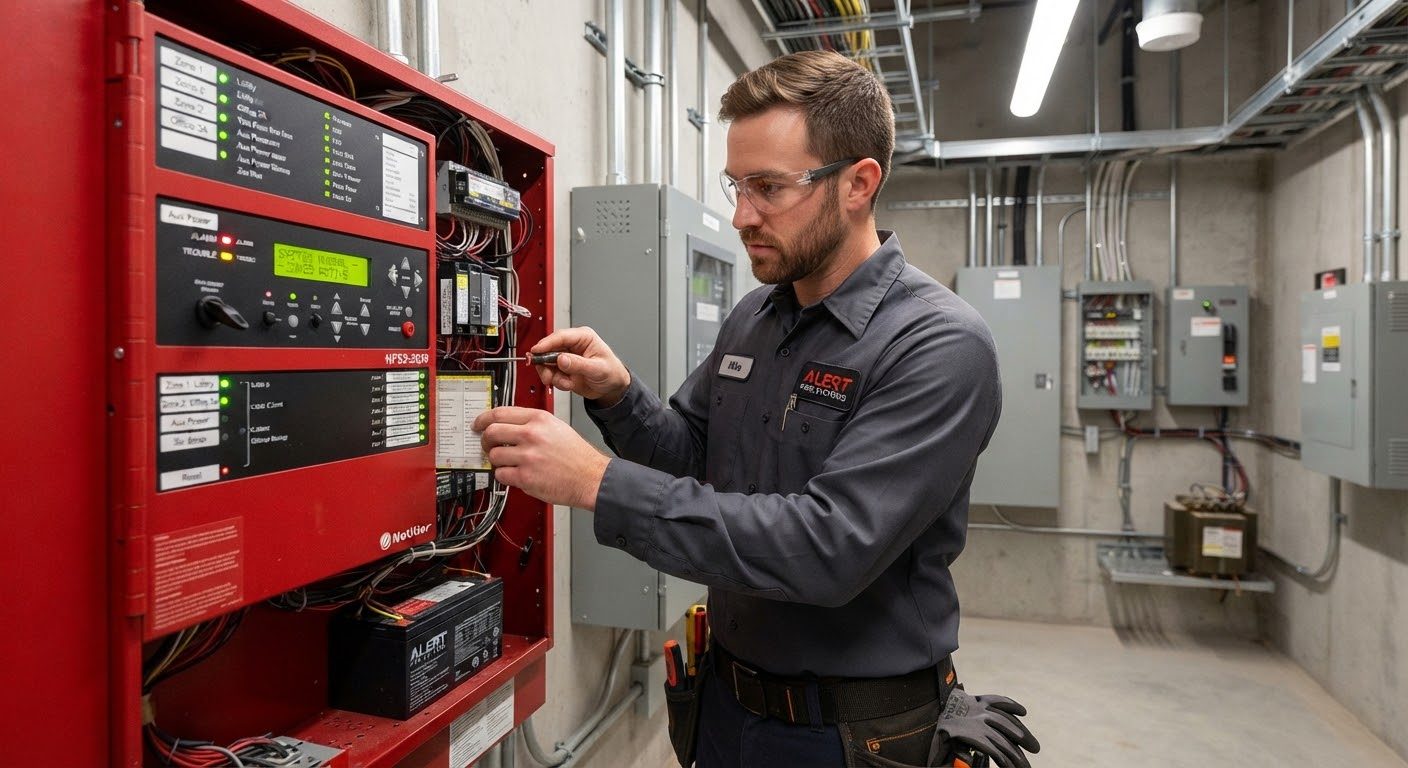
What these contractors handle
- Annual NFPA 72 testing and inspection of panels, initiating devices, and notification appliances
- Smoke and heat detector sensitivity testing
- Fire alarm system design, installation, and permitting
- Panel repairs, upgrades, and replacement (addressable and conventional)
- 24/7 UL-listed central station monitoring
- Documentation and reports for the AHJ and your insurer
Code-required service schedule
Schedules summarize national NFPA standards; your local fire code and AHJ requirements control. Verify specifics with a licensed local contractor.
Find a licensed contractor near you
Compare local pros, check license credentials, and contact them directly — free.
Find a Pro