
Fire protection is one of the few building services the law requires on a recurring schedule. Four NFPA standards set the clock for nearly every commercial building in the United States: NFPA 25 for water-based systems, NFPA 72 for fire alarms, NFPA 10 for portable extinguishers, and NFPA 96 for commercial kitchens. Your state and local fire codes adopt these standards, and your fire marshal — the authority having jurisdiction, or AHJ — enforces them during routine and complaint-driven inspections.
This guide lays out the full commercial fire inspection schedule the way a facility calendar actually works: what's due monthly, quarterly, semiannually, annually, and on multi-year cycles; who's allowed to do each task; and what each visit should include. It reflects the national standards — your AHJ can and sometimes does require more, so treat this as the floor, not the ceiling.
The master schedule at a glance
| Frequency | System | What's required | Who performs it |
|---|---|---|---|
| Monthly | Extinguishers | Visual check: gauge, seal, access, tag | Your staff |
| Monthly | Emergency lighting | 30-second function test | Your staff |
| Quarterly | Sprinklers | Water flow alarms, valve supervisory devices, main drain test where required | Licensed contractor |
| Semiannually | Kitchen hood suppression | Full system service incl. fusible links | Licensed contractor |
| Annually | Sprinklers | Full NFPA 25 inspection and test | Licensed contractor |
| Annually | Fire alarm | Complete NFPA 72 functional test | Licensed contractor |
| Annually | Extinguishers | Professional maintenance + new tag | Licensed contractor |
| Annually | Emergency lighting | 90-minute full-discharge test | Contractor or trained staff |
| Every 2 years | Fire alarm | Smoke detector sensitivity testing | Licensed contractor |
| Every 5 years | Sprinklers | Internal pipe inspection, gauge replacement, check valve internals | Licensed contractor |
| 6 / 12 years | Extinguishers | Internal maintenance (6-yr), hydrostatic test (12-yr) | Licensed contractor |
Fire sprinkler inspection requirements — NFPA 25
NFPA 25 is the standard for inspection, testing, and maintenance of water-based fire protection systems, and it works in layers:
- Weekly/monthly (your staff): visual checks that control valves are open, sealed, and accessible, and that gauges read normal pressure. Five minutes of walking, and the single cheapest insurance you can buy — a closed valve is the classic cause of sprinkler failure in real fires.
- Quarterly (licensed contractor): testing of water flow alarm devices and valve supervisory devices, plus main drain tests where required. Most buildings bundle these into a service agreement rather than four separate call-outs.
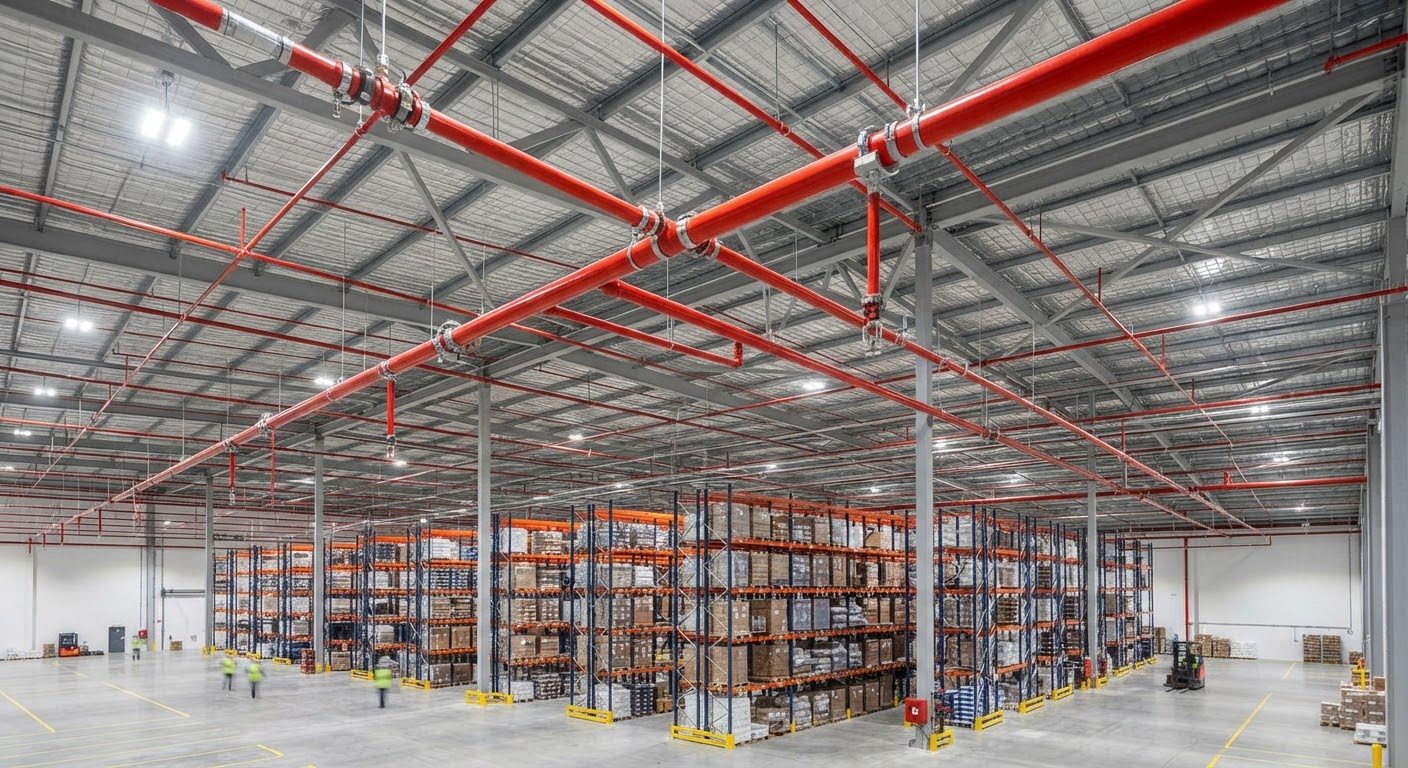
- Annually (licensed contractor): the full inspection — all visible piping and sprinkler heads, hangers and seismic bracing, signage, spare head cabinet, and a main drain flow test. This is the inspection your fire marshal and insurer will ask to see documented.
- Every 5 years: the internal inspection cycle — piping is opened at designated points and examined for corrosion, scale, and obstructions; gauges are replaced or calibrated; check valves are opened and inspected. Our dedicated 5-year inspection guide covers exactly what gets opened and what it costs.
Dry, pre-action, and deluge systems add their own items (low-point drains before freezing weather, full trip tests on multi-year cycles). Budget guidance for all of it is in our sprinkler inspection cost guide.
Fire alarm inspection requirements — NFPA 72
NFPA 72, the National Fire Alarm and Signaling Code, requires a complete functional test at least annually: the panel, every initiating device (pull stations, smoke and heat detectors, waterflow and tamper inputs), every notification appliance (horns and strobes), batteries, and the communication path to your monitoring central station.
- Semiannually: visual inspections of certain initiating devices, depending on environment.
- Every 2 years: smoke detector sensitivity testing (after the initial first-year test) — detectors drift as they age and load with dust, and sensitivity testing catches both the ones that would miss a fire and the ones about to start nuisance-alarming.
Monitored systems (most commercial occupancies with required alarm systems) must transmit to a constantly attended location — typically a UL-listed central station. If your panel is showing a yellow light right now, read our guide to fire alarm trouble signals before your next inspection does it for you.
Fire extinguisher requirements — NFPA 10
- Monthly (your staff): a visual check of every unit — pressure gauge in the green, pin and tamper seal intact, unit accessible and hanging where it belongs, tag legible.
- Annually (licensed company): professional maintenance and a new dated service tag. The tag is the first thing a fire marshal looks at.
- Every 6 years: internal maintenance (teardown) for most stored-pressure dry chemical units.
- Every 12 years: hydrostatic shell testing to verify cylinder integrity.
Commercial kitchens also need a Class K extinguisher within 30 feet of cooking appliances. Per-unit pricing for all of this is in our extinguisher service cost guide.
Kitchen hood suppression — NFPA 96
If you operate a commercial kitchen, the wet-chemical system protecting your hood, ducts, and appliances must be inspected and serviced every six months by a qualified company, including fusible link replacement. An out-of-date hood tag can shut a kitchen down during a health or fire inspection — it's the single most common restaurant fire violation. The full requirements, including UL 300 compliance for older systems, are in our kitchen hood suppression guide.
Emergency and exit lighting — NFPA 101 / OSHA
- Monthly: a 30-second push-button function test of battery-backed units.
- Annually: a 90-minute full-discharge test proving the batteries can carry the lights through a real outage-and-evacuation window. Failed batteries are by far the most common finding.
Building the calendar
For a typical sprinklered commercial building with a monitored alarm system, the realistic minimum calendar is: one annual sprinkler inspection, four quarterly sprinkler visits (usually bundled), one annual alarm test, one annual extinguisher route visit, monthly in-house checks, and the multi-year items tracked ahead. Add two hood services if there's a kitchen.
Three practical moves make the schedule cheap to keep:
- Bundle vendors. Many fire protection companies handle sprinklers, alarms, and extinguishers in a single visit — one trip charge, one report package for the AHJ and your insurer. It's the biggest cost lever available; see the bundling math in the cost guide.
- Put every cycle on an actual calendar. Our free Compliance Calendar Builder turns your building's systems into a downloadable inspection schedule; the Building Requirements Checker tells you which systems your occupancy likely needs in the first place.
- Keep the paper. Inspection reports, service tags, and correction records are what stand between a routine fire marshal visit and a violation list — and between a paid and disputed insurance claim. If you've already received a violation notice, here's what happens after a failed fire inspection.