
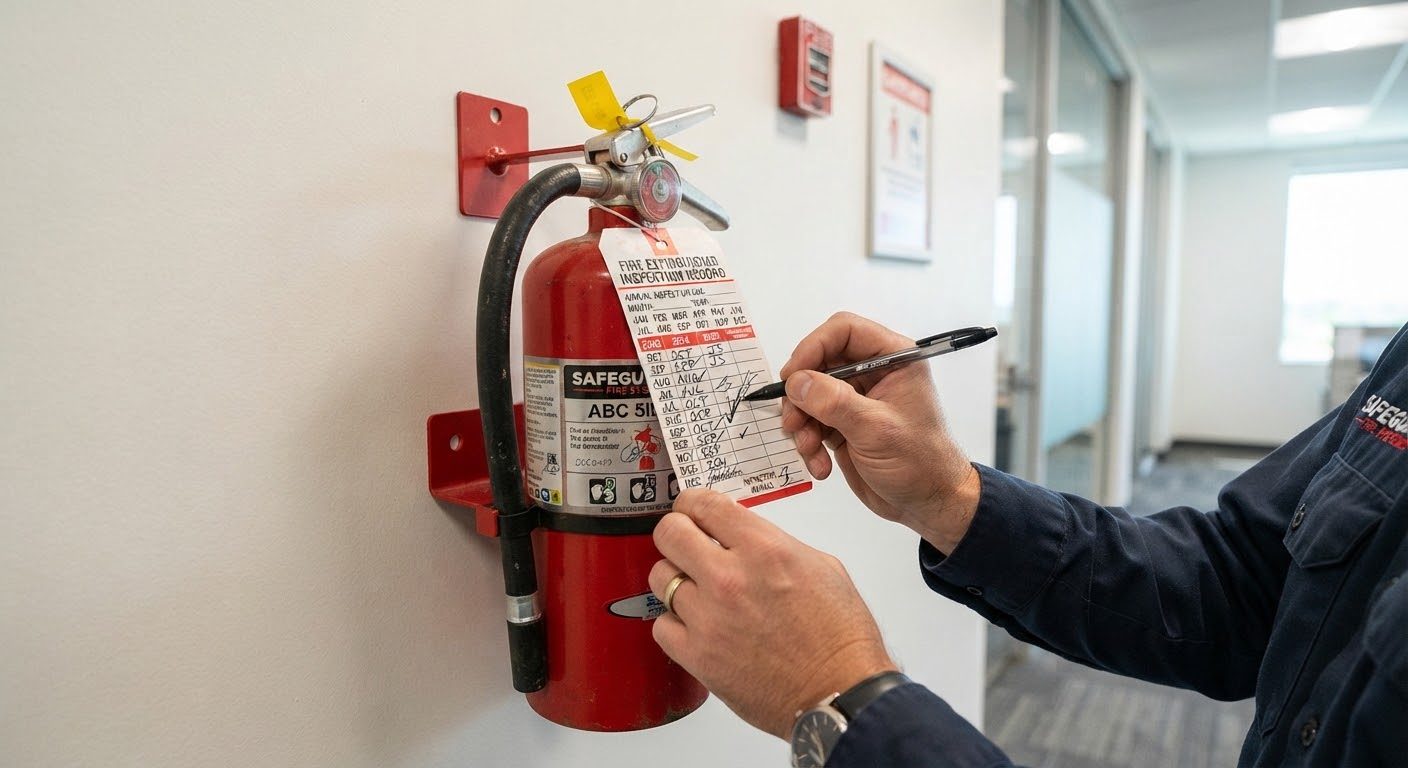
The rule is simpler than most owners expect: if an extinguisher discharged, for any reason, for any length of time, it gets recharged — a kitchen flare-up, a parking-lot prank, a curious employee. Partial pressure isn't protection; a used unit can leak down through the valve and read fine on the gauge until the day it doesn't. Here's how recharging works, what it costs, and when the smarter move is a new unit.
When recharge is required
- After any discharge — full or partial, fire or accident.
- At the 6-year internal maintenance — rechargeable dry-chemical units get emptied, internally examined, refilled, and re-sealed.
- After the 12-year hydrostatic test — the shell is pressure-tested, then the unit is recharged.
- Any time the gauge reads out of the green or the tamper seal is broken — service first, questions after.
These points come from NFPA 10, the same standard behind your annual inspection and tagging — most recharges happen as part of that same service relationship.
The cost math
| Service | Typical range |
|---|---|
| Recharge, standard ABC dry chemical (5–10 lb) | $20 – $60 |
| Recharge, Class K / CO2 / specialty agents | $40 – $100+ |
| 6-year internal maintenance (incl. recharge) | $25 – $60 |
| Hydrostatic test + recharge (12-year) | $40 – $100 |
| New commercial 5-lb ABC unit, for comparison | $40 – $80 |
That last row drives the real decision: when a recharge-plus-testing bill on an aging unit approaches the price of a new extinguisher, replace it. Always replace: disposable units (they're sealed — recharging isn't possible), anything corroded or damaged, and units that fail hydro. Your service company will make the call unit-by-unit during the annual visit — and if you're rebalancing coverage while you're at it, our placement guide and free calculator give you the count before they arrive.
Getting it done
Recharging is licensed work — agent, valve, and pressurization — done in the shop or on a service truck, usually same-week. If a discharge leaves you short of code-required coverage in the meantime, ask the company for loaner units; route operators carry them. Verify the company's extinguisher service license (state specifics in our Florida, Texas, and California guides), then see what full extinguisher service covers or find a route company near you.