
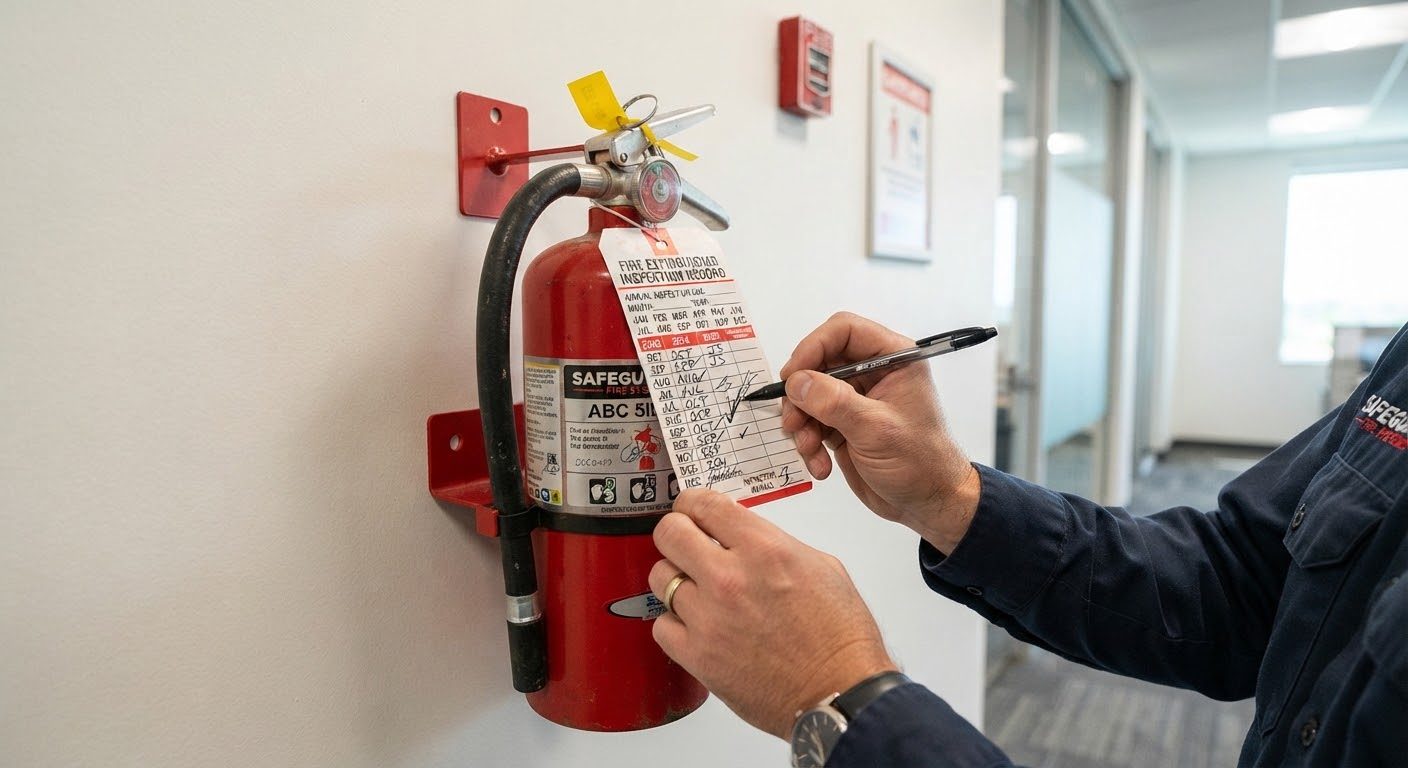
Commercial kitchens are the highest fire-risk occupancy most cities have, and NFPA 96 — the standard for ventilation control and fire protection of commercial cooking operations — treats them accordingly. The rule every restaurant, cafeteria, and commissary lives under is simple: the wet-chemical suppression system protecting your hood, ducts, and appliances must be inspected and serviced every six months by a qualified company, and the tag proving it hangs on the system in plain sight.
Health inspectors and fire marshals both check that tag. An expired one can shut a kitchen down on the spot — it's the most common restaurant fire violation, and the most avoidable.
What NFPA 96 requires, beyond the tag
- Semiannual suppression system service — the six-month cycle covered in detail below.
- Exhaust system cleaning — hoods, ducts, and fans degreased on a schedule set by cooking volume: quarterly for high-volume operations (solid fuel, 24-hour operations), semiannually for moderate volume, annually for low volume. Grease-laden ducts are the fuel path that turns a flare-up into a building fire.
- UL-listed components and clearances for new installations, and interlocks so cooking fuel shuts off when the system discharges.
Inside the semiannual service visit
A compliant visit is mechanical, not clerical. The technician should:
- Inspect the wet-chemical cylinders (pressure, weight, condition), distribution piping, and every nozzle — including nozzle caps, the small covers that keep grease out of the discharge path;
- Replace the fusible links — the heat-sensitive elements that trigger the system. These are consumables, replaced at every service, no exceptions;
- Verify nozzle aim against the current appliance lineup — if you moved the fryer since the last visit, the nozzles may be protecting empty counter space;
- Test the manual pull station and the fuel/power shutoff interlock, so a discharge also kills the heat source;
- Tag the system with the service date and company credentials.
That appliance-lineup point deserves emphasis: hood systems are engineered to a specific appliance arrangement. Kitchens rearrange; systems don't follow automatically. Tell your service company when the line changes — a re-aim visit is cheap; a discharge that misses the fryer is not.
What UL 300 means — and why older kitchens get pressured
UL 300 is the fire-test standard modern wet-chemical systems are listed against. It exists because kitchens changed: high-efficiency fryers hold heat longer, and vegetable oils burn hotter and re-flash more readily than the animal fats older systems were tested on. Pre-UL 300 dry-chemical systems repeatedly failed against modern fryer fires — knock the flames down, walk away, re-ignition.
If your kitchen still runs an older dry-chemical system, expect pressure from two directions: insurers increasingly surcharge or decline them, and many AHJs require an upgrade when appliances or the system change. A UL 300 retrofit is a one-time capital cost that usually pays back through the insurance line — and removes a shutdown risk that grows every year.
The Class K extinguisher
NFPA 10 requires a Class K portable extinguisher within 30 feet of commercial cooking appliances, as a supplement to (never a substitute for) the hood system — it's the backstop for a fire caught at the pan stage. Signage should tell staff to activate the hood system first. The Class K unit rides the standard annual extinguisher service cycle, usually on the same visit as the hood service.
What it costs
| Item | Typical cost |
|---|---|
| Semiannual hood system service (single hood) | $150–$400 per visit |
| Fusible links / nozzle caps | Inexpensive consumables, included or small line items |
| Recharge after discharge | Several hundred dollars, system-dependent |
| UL 300 retrofit | Capital project; quote per kitchen |
Book both annual visits at the start of the year — six months arrives faster than every restaurant expects, and the single most common violation is simply a lapsed tag. The free Compliance Calendar Builder includes the semiannual hood cycle alongside everything else in the commercial fire inspection schedule.
Ready to schedule? Kitchen hood suppression companies are listed by metro in our directory, license credentials shown.