
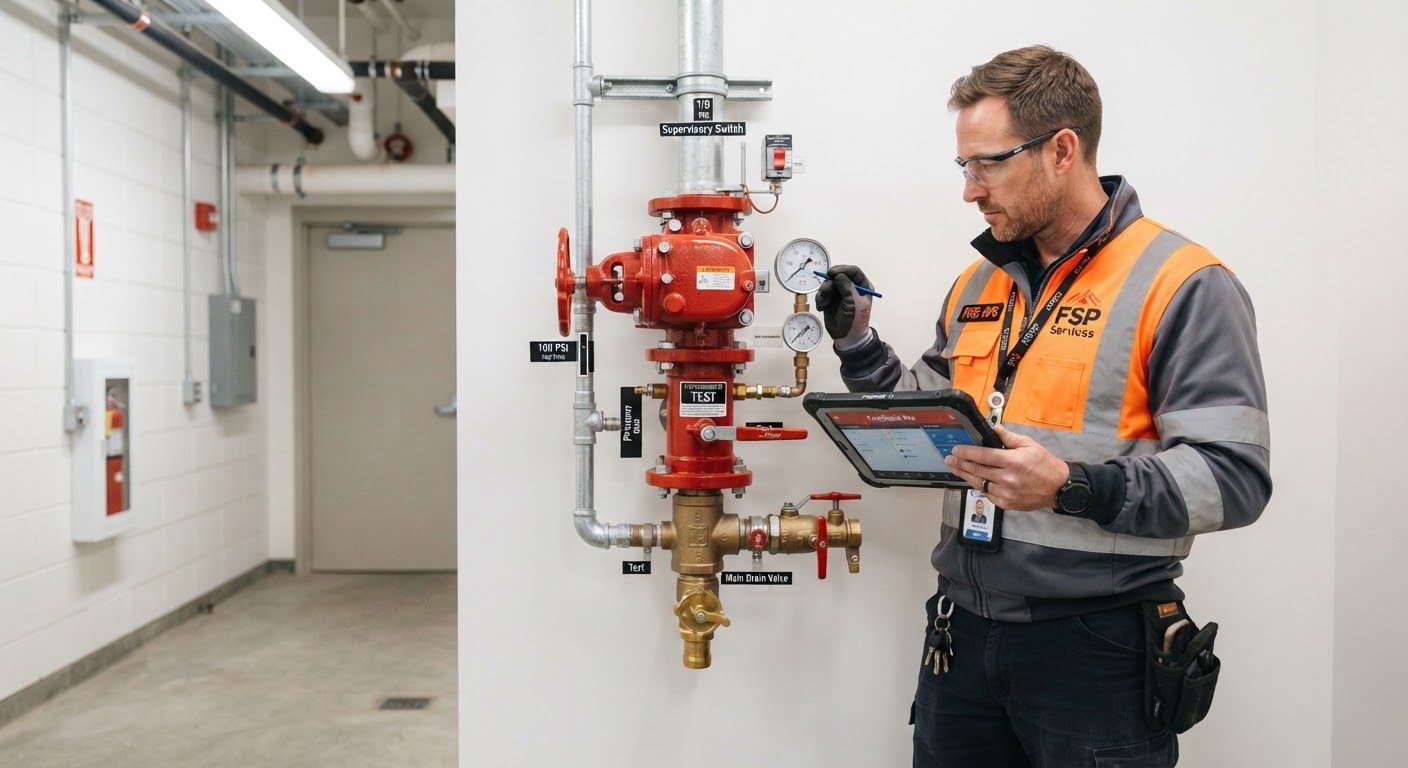
Quarterly and annual sprinkler inspections look at the system. The five-year inspection looks inside it. NFPA 25's five-year cycle is where pipes get opened, valves get disassembled, and gauges come off the system — because corrosion, scale, and obstructions build up invisibly, and the only way to catch them before they block water in a fire is to physically look.
It's also the inspection building owners most often haven't budgeted for, because it arrives twice a decade and costs several times an annual visit. Here's exactly what it involves.
What the 5-year inspection includes
- Internal pipe inspection. Piping is opened at designated points — the flushing connection at the main's end and a removed sprinkler near a branch line end — and examined for foreign organic and inorganic material, scale, and evidence of microbiologically influenced corrosion (MIC). This is the heart of the five-year cycle.
- Check valve internals. Check valves are opened and internally examined to confirm they move freely and seat correctly.
- Gauge replacement or calibration. Every system pressure gauge must be replaced or laboratory-tested every five years. Most contractors simply replace them — gauges are cheap; calibration paperwork isn't.
- Backflow preventer internals. Where the sprinkler supply runs through a backflow device, it gets an internal inspection alongside its performance test.
- Strainers, filters, and orifices cleaned or replaced to keep flow paths clear.
- Standpipe testing. Buildings with standpipe systems add hydrostatic and flow testing on the same five-year clock.
Separately, certain sprinkler head populations carry their own laboratory-test-or-replace cycles (fast-response heads at 20 years, dry sprinklers at 10, heads in harsh environments at 5), which a good contractor tracks for you.
What it costs
| Scope | Typical cost |
|---|---|
| Internal inspection, single system | $500–$600 |
| Each additional check valve | ~$100 |
| Multi-system / complex facilities | $1,000–$3,000+ |
| Obstruction investigation & flushing (if triggered) | Separate scope, often four figures |
Full annual-program pricing context is in our sprinkler inspection cost guide. The five-year premium over an annual inspection buys labor: draining sections, opening flanges, pulling heads, and putting it all back together — then documenting everything for your AHJ and insurer.
What five-year inspections tend to find
- MIC and oxygen-cell corrosion — especially in dry and pre-action systems where trapped water meets air. Left alone, MIC eats pinhole leaks through pipe walls and seeds obstructions.
- Scale and sediment in older wet systems on hard municipal water, accumulating at low points and branch line ends — exactly where the water needs to go.
- Construction debris in systems that were modified over the years: cutting oil, weld slag, even tools. It's why NFPA 25 checks the far ends of the system, not the riser room.
- Seized or mis-seated check valves that pass water in normal conditions but wouldn't behave correctly under fire flow or backflow conditions.
When evidence warrants, NFPA 25 escalates to a formal obstruction investigation — a broader internal examination and flush. Nobody enjoys that quote, but consider what it means: your system had a developing failure that no annual visit would ever have caught.
Scheduling it without pain
- Know your date. The five-year clock runs from the last internal inspection (or system installation). If you don't know yours, your inspection reports do — or your contractor's records.
- Bundle it with the annual. Contractors routinely combine the five-year scope with that year's annual inspection — one mobilization, one drain-down, one report.
- Expect and budget for findings. A five-year that finds nothing is good news, not wasted money. Budget a contingency for gauge replacement (automatic) and possible valve or flushing work.
- Put it on the same calendar as everything else. Our free Compliance Calendar Builder tracks multi-year cycles alongside the quarterly and annual work — and the full recurring picture is in the commercial fire inspection schedule.
Five-year internals are specialist work — verify any bidder's license and ask specifically about internal inspection experience and MIC assessment. Find licensed sprinkler contractors in your metro, credentials shown on every profile.