
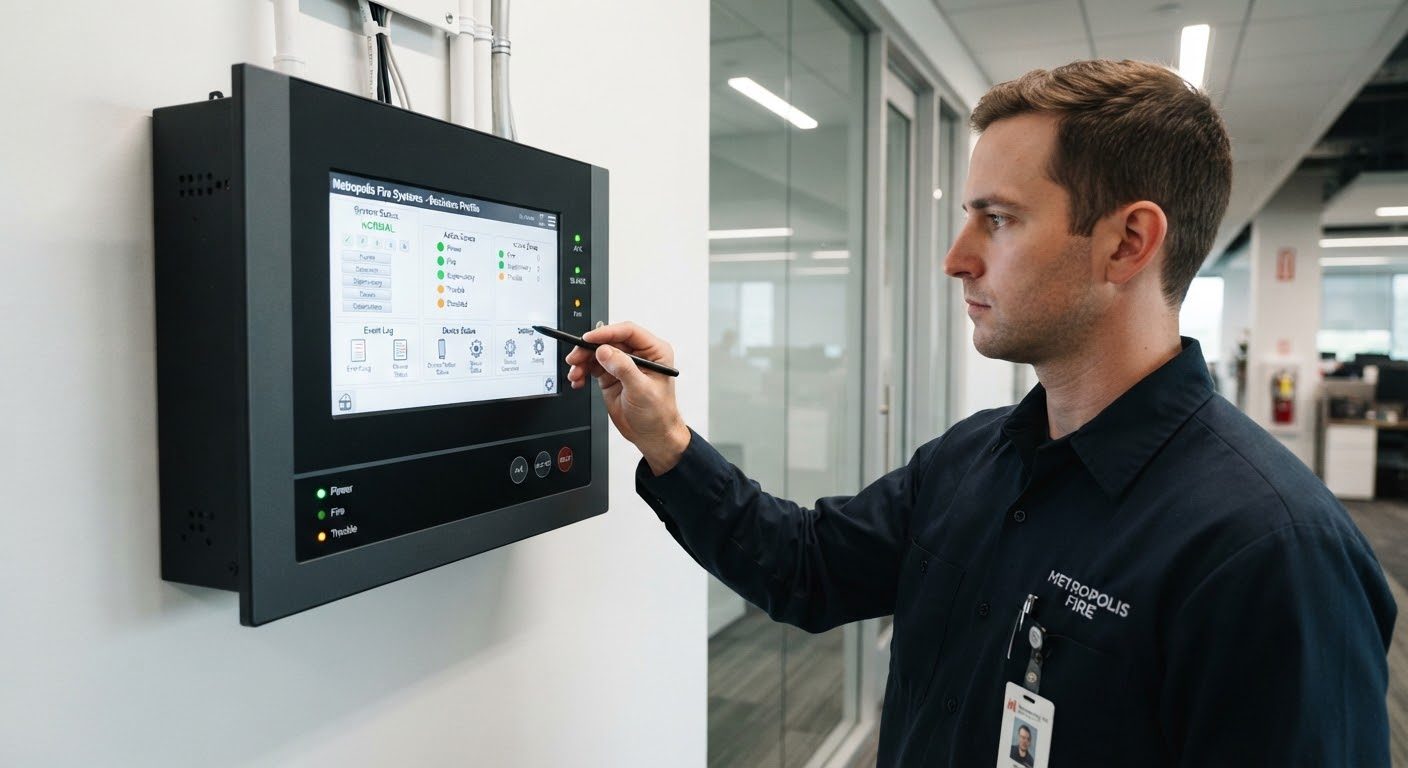
A fire watch is what the fire code prescribes when a building's automatic protection can't do its job: trained humans, physically patrolling, around the clock, until the system is back. It's mandated by NFPA provisions adopted into virtually every state and local fire code, ordered by your fire marshal (the AHJ), and billed by the hour — which makes it one of the most expensive ways ever devised to discover that your inspection contract lapsed.
Here's when a fire watch is required, what it must include, what the market charges, and how to end one quickly.
When a fire watch is required
- System impairment beyond 4 hours. The trigger most building owners meet: when a required sprinkler or fire alarm system is out of service for more than 4 hours in a 24-hour period in an occupied building, the code requires the building to be evacuated or a fire watch established. Planned impairments (a 5-year internal inspection, a riser repair) count just like emergencies.
- Hot work. Welding, cutting, brazing: a fire watch must be maintained during the work and for at least 30 minutes after it ends, watching for smoldering ignition.
- AHJ orders. Fire marshals can order a watch for overcrowded assembly occupancies, repeated false alarms, construction conditions, or any hazard they judge warrants it.
Notification matters as much as the watch itself: impairment procedures require informing the fire department and your monitoring central station when a system goes down — and when it comes back. Skipping the notification step turns a routine impairment into a violation.
What the watch must actually do
A fire watch isn't a warm body with a flashlight. Under commonly adopted requirements, personnel must:
- Patrol continuously — typically rounds every 30–60 minutes covering all affected areas, with no other assigned duties;
- Carry an approved means of notifying the fire department (in practice, a charged phone plus knowledge of the address and system status);
- Know the building — alarm points, extinguisher locations, exit routes — and be able to direct evacuation;
- Keep a written log of rounds, which the AHJ may ask to see.
Who can serve varies by jurisdiction: some allow trained building staff, many require or strongly prefer licensed security personnel with fire watch training, and some AHJs specify staffing ratios for large or complex buildings. Ask your fire marshal before you improvise — an inadequate watch is treated as no watch.
What fire watch costs
| Service type | Typical rate |
|---|---|
| Pre-scheduled fire watch (planned impairment) | $35–$50+/hour per guard |
| Emergency / short-notice response | $50–$200+/hour |
| Around-the-clock, low end | ~$850–$1,200/day |
Multiply by duration: most repair-driven watches resolve in one to three days, but a backordered fire pump part or a slow re-inspection can stretch a watch into weeks. A two-guard, two-week emergency watch can quietly exceed the cost of a decade of the routine inspections that would have prevented it.
Ending a fire watch fast
- Treat the impairment as the emergency, not the watch. The watch is a symptom. Get a licensed contractor mobilized on the repair the same day — with the violation or impairment details in hand so they arrive with the right parts.
- Coordinate the retest before the repair finishes. Many systems need a functional retest (and sometimes AHJ acceptance) before the watch can stand down. Book it in advance so the system doesn't sit repaired-but-unaccepted over a weekend at $1,000+/day.
- Document the timeline. When the watch started, rounds logged, when the system was restored and retested. Your AHJ closes the order on documentation; your insurer may ask for the same package.
- Fix the root cause. Most impairment-driven watches trace to deferred maintenance or a failed inspection finding left uncorrected. If that's how you got here, read what happens after a failed fire inspection — and put every system on a real calendar with the free Compliance Calendar Builder.
Need the repair side moving? Find licensed fire protection contractors in your metro — license credentials are shown on every profile, so you can verify before you dispatch.