
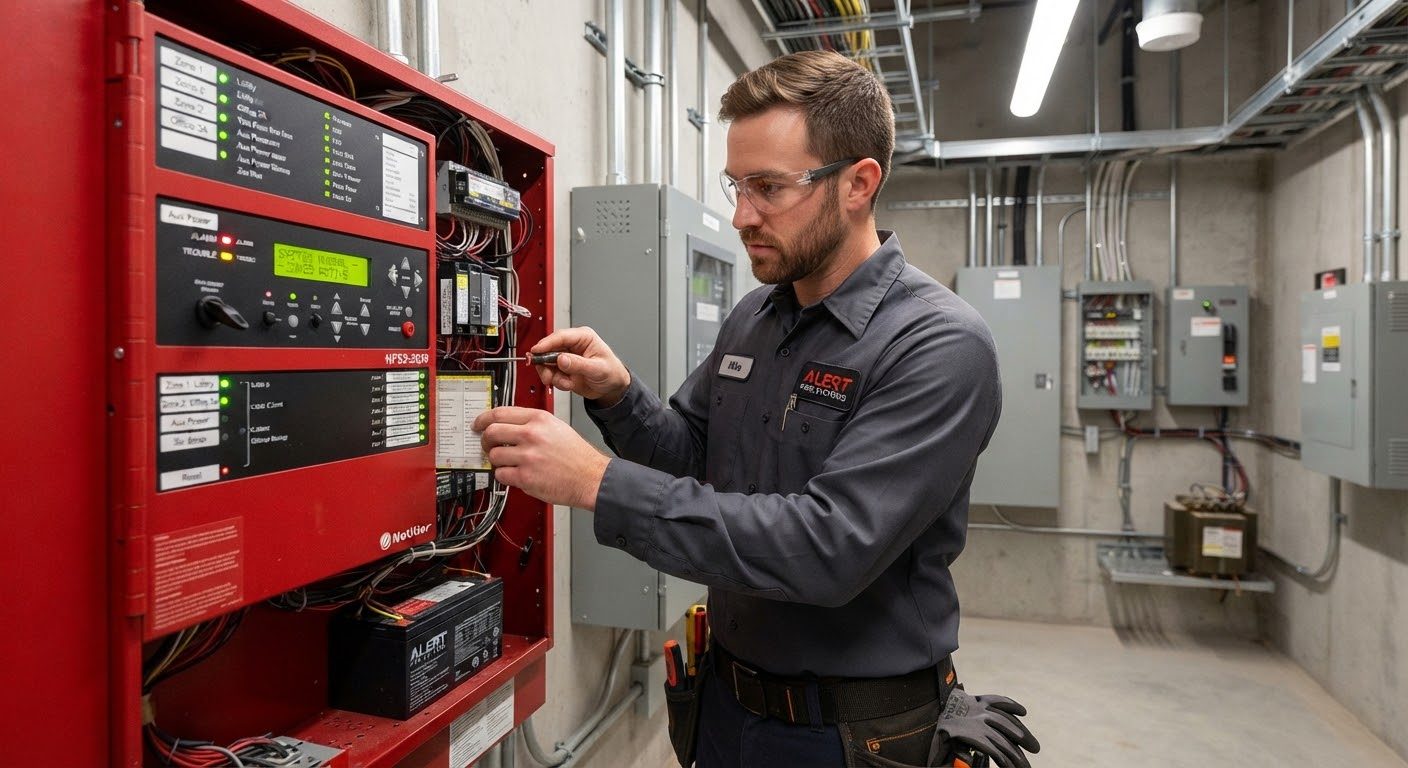
Fire alarm inspection pricing is driven by a simple reality: a technician has to put eyes and a meter on every device in your system, every year. NFPA 72 — the National Fire Alarm and Signaling Code — requires a complete annual functional test, and the cost scales with how many devices that test has to touch. Here are the real market ranges as of July 2026, and how to read a quote.
Annual inspection cost by system size
| System profile | Typical annual cost |
|---|---|
| Small commercial property, basic system | $300–$1,000 |
| Mid-size building, moderate device count | $1,000–$1,500 |
| Multi-story, campus, or specialized facility | $1,500–$3,000+ |
| Large facility (~500 devices) | $7,000–$8,000 |
Under the hood, most contractors build these numbers from two rates: a per-panel charge — typically $50–$200 per fire alarm control panel (FACP) — plus per-device pricing across pull stations, detectors, horns, and strobes. When you compare quotes, ask for the device count each vendor priced against; discrepancies usually mean someone walked the building and someone else guessed.
What the annual test must include
A code-compliant NFPA 72 annual isn't a glance at the panel. It covers:
- The panel itself — programming, trouble history, ground faults, and standby batteries (load-tested, not just looked at).
- Every initiating device — each smoke and heat detector functionally tested, every manual pull station pulled, every waterflow and tamper switch tripped.
- Every notification appliance — horns and strobes activated and verified for coverage and candela ratings.
- Monitoring communications — signals transmitted and confirmed received at the central station.
On the two-year cycle, add smoke detector sensitivity testing — aging detectors drift out of their listed sensitivity range in both directions, and the drifting-sensitive ones are where nuisance alarms come from. If your panel is already showing a yellow trouble light, our trouble signals guide explains what it means and what it costs to ignore.
The add-ons that move quotes
- Sprinkler-connected devices. Waterflow and valve tamper switches have to be tested in coordination with the sprinkler side — expect them to add at least 20% to alarm inspection costs. (One more argument for using a single contractor across both systems; see our sprinkler cost guide.)
- Access difficulty. Hard-to-reach devices add 10–15% on average, and high-ceiling installations that need a scissor lift can add equipment rental around $600/day.
- After-hours requirements. Healthcare, manufacturing, and government facilities that restrict testing to off-hours pay a premium for the same work.
- Deficiency repairs. As with every fire protection inspection, the test fee doesn't include fixing what fails. Batteries are the most common line item — they age out every 3–5 years regardless of use.
Don't confuse testing with monitoring
Two different recurring costs, often on two different invoices:
- Inspection & testing — the annual NFPA 72 work above.
- Central-station monitoring — the 24/7 service that dispatches the fire department when your system activates, commonly $40–$120+ per month depending on communication technology. Cellular communicators have largely replaced POTS phone lines; if you're still paying for two dedicated phone lines to feed an old dialer, a communicator upgrade frequently pays for itself inside a year.
How to buy it well
- Get the device count on paper. It's the pricing basis; make every bidder quote against the same one.
- Bundle where you can. A contractor handling alarms plus sprinklers and extinguishers in one visit removes duplicate trip charges and gives your fire marshal one tidy report package. The full recurring calendar is in our commercial fire inspection schedule.
- Verify the license and NICET credentials before signing — here's how, and our directory shows credentials on every profile.