
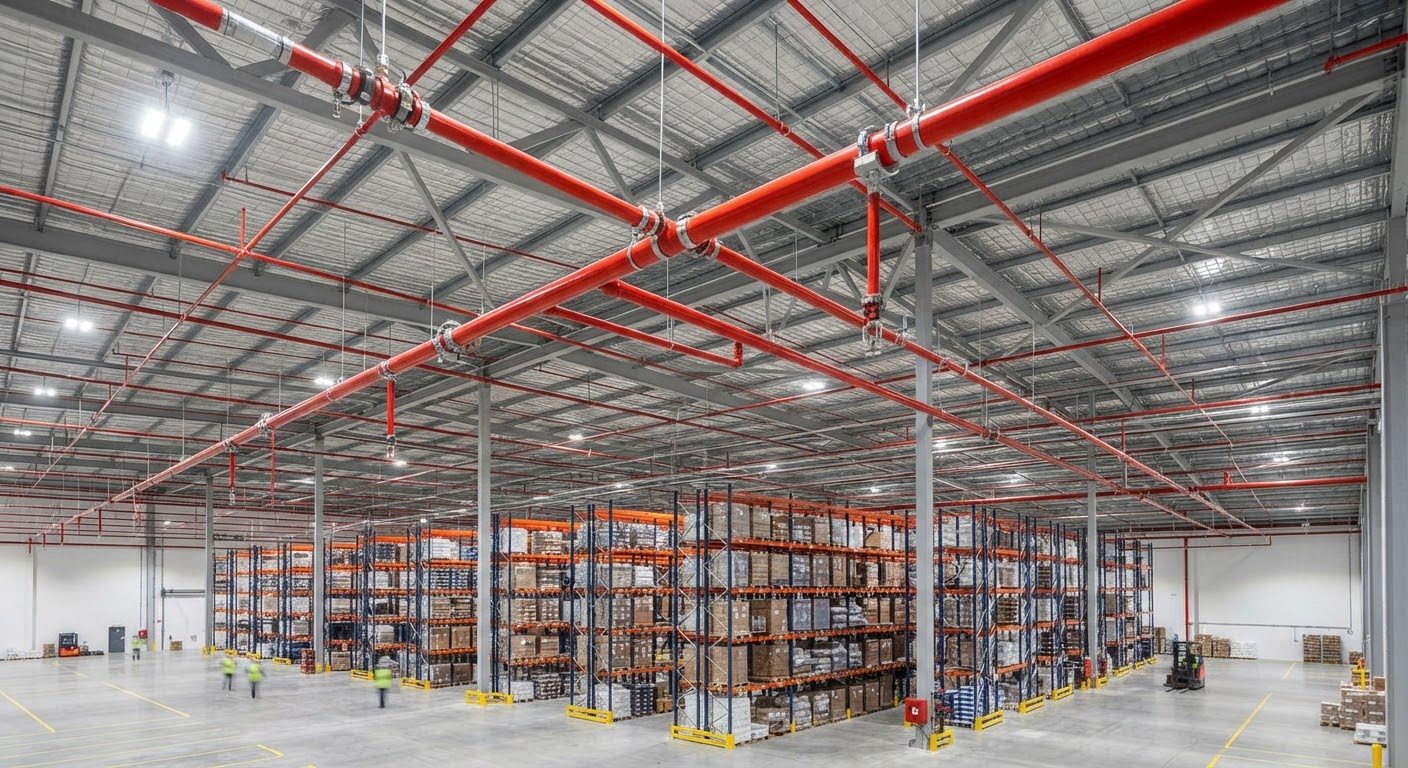
Sprinkler installation quotes confuse buyers because the honest answer is a range: the same 10,000-square-foot building can price at $15,000 or $70,000 depending on when the system goes in, what hazard it protects, and what the water supply looks like. This guide breaks the range down so a quote makes sense when it lands. Figures are market ranges compiled from published 2026 contractor pricing — your local quotes control.
Cost by scenario
| Scenario | Typical range (per sq ft) | 10,000 sq ft example |
|---|---|---|
| New construction, light/ordinary hazard (NFPA 13) | $1 – $3 | $10,000 – $30,000 |
| New apartment/residential (NFPA 13R) | $1 – $2.50 | $10,000 – $25,000 |
| New single-family home (NFPA 13D) | $1 – $2 | — |
| Commercial retrofit, accessible ceilings | $2 – $4 | $20,000 – $40,000 |
| Difficult retrofit (finished/occupied/high-rise) | $4 – $10+ | $40,000 – $100,000+ |
The five things that move the number
- New vs. retrofit — the single biggest factor, for pure access reasons.
- Hazard classification — a warehouse with high-piled storage needs denser coverage, bigger pipe, and possibly in-rack sprinklers; costs can double versus office space.
- Water supply — if street pressure can't feed the system's hydraulic demand, you're adding a fire pump (commonly $15,000–$50,000+ installed) and possibly a larger water service or tank.
- System type — wet systems are the baseline; dry and pre-action systems (for freezing spaces and water-sensitive areas like server rooms) add equipment and cost; see our suppression systems overview for the alternatives protecting critical assets.
- Design and permitting — hydraulic calculations, stamped drawings, plan review, and AHJ inspections are real line items, typically 10–15% of the job.
Reading a sprinkler quote
A solid proposal itemizes design/permits, materials, labor, and any water-supply work — and names the standard it's designed to (NFPA 13, 13R, or 13D matters: they're different systems with different coverage, and a 13R system in a building that needs 13 is a problem your fire marshal will find). Get two or three quotes from licensed contractors and make sure they're bidding the same standard and hazard classification, or the numbers aren't comparable. Verify licensing first — see our license verification guide and the state specifics for Texas, California, and Florida.
After installation: the recurring costs
Ownership puts you on the NFPA 25 clock — quarterly checks, annual inspections, and 5-year internal inspections. Budget a few hundred to a few thousand dollars per year depending on building size; our inspection cost guide and 5-year inspection guide break it down, and the free compliance calendar puts every date on your schedule. Compare licensed sprinkler contractors near you to get real local numbers.