
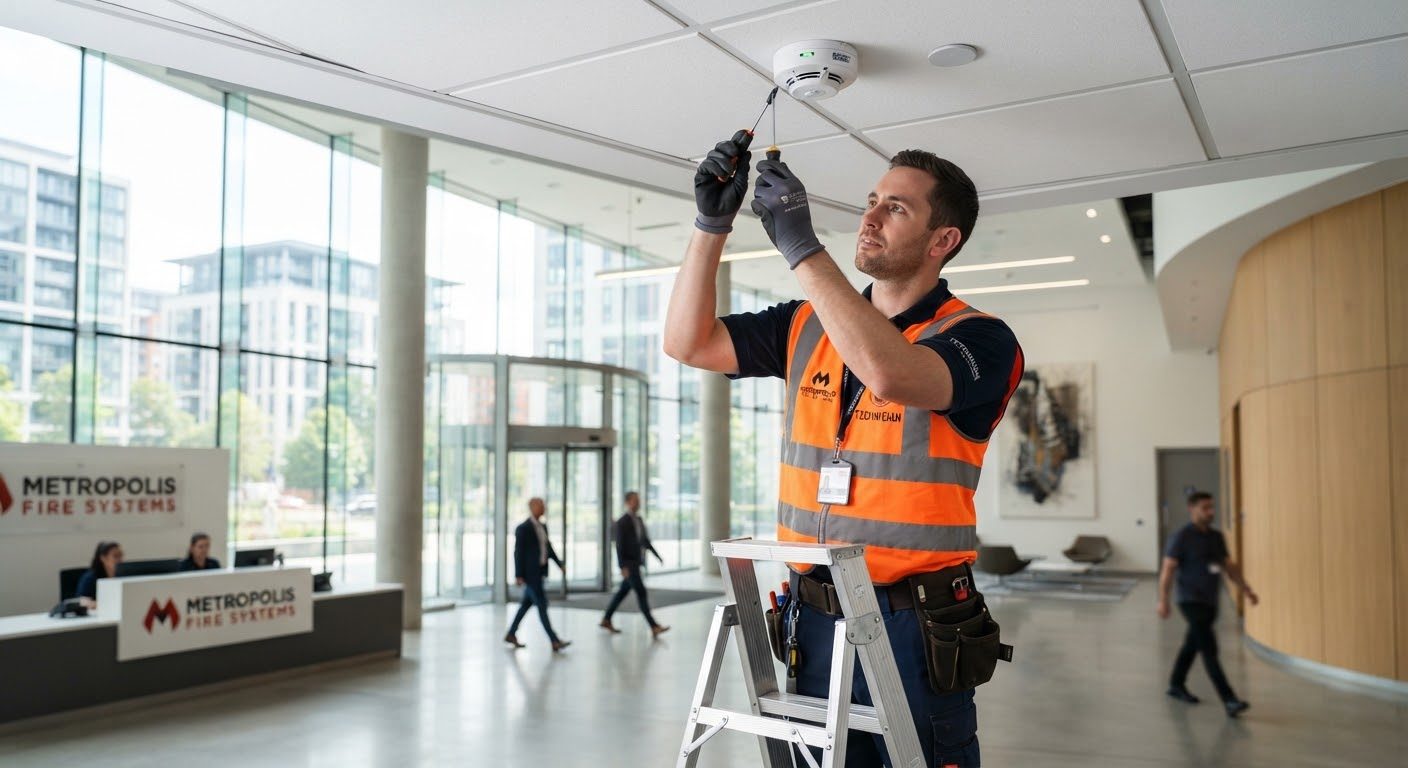
Emergency lighting is the fire protection system everyone ignores until the power actually fails — at which point it has exactly one job: 90 minutes of light along every egress path. The code backs that up with the least glamorous, most commonly skipped test schedule in the building. Here's the whole requirement, and the 15-minute system for never failing it.
The two required tests
| Test | Frequency | Duration | Who can do it |
|---|---|---|---|
| Function test (test button) | Monthly | 30 seconds per unit | Your staff |
| Full discharge test | Annually | 90 minutes | Staff or contractor |
Both come from NFPA 101 (the Life Safety Code) as adopted by your fire code, both apply to battery-backed emergency lights and illuminated exit signs, and both must be written down — date, unit, result, corrective action. An untested-but-working fleet and a tested-and-logged fleet look identical on the wall; only one of them passes an inspection.
Running the monthly check
Walk the building with the log sheet: press and hold each unit's test button for 30 seconds, confirm the lamps come on and stay on, note anything dim, dead, damaged, or blocked. A mid-size building takes one person under an hour. Assign it a recurring calendar slot — our free compliance calendar builder includes emergency lighting alongside every other system's dates.
Running the annual 90-minute test
Once a year, each unit must prove the full rating: switch it to battery (test button held, breaker method, or the unit's test feature) and verify it's still adequately lit at the 90-minute mark. Practical tips from people who do this at scale: test in zones so the building never loses all coverage at once; expect the failures to cluster in units 3–5 years old (that's battery end-of-life); and photograph the log — inspectors accept it and you can't lose it. If walking hundreds of fixtures twice isn't a good use of staff time, contractors fold this into annual service at roughly $2–$5 per fixture, usually bundled with the alarm inspection visit.
Where buildings get cited
- No log. The tests may have happened; without documentation they didn't.
- Dead batteries left in place — the classic easy citation.
- Blocked or missing signage — storage in front of egress lighting, burned-out exit sign faces.
- New walls, old lighting — renovations that change egress paths without re-evaluating coverage.
Emergency and exit lighting is one of the services on our directory's coverage list — find companies near you that bundle it with the rest of your code-required schedule.